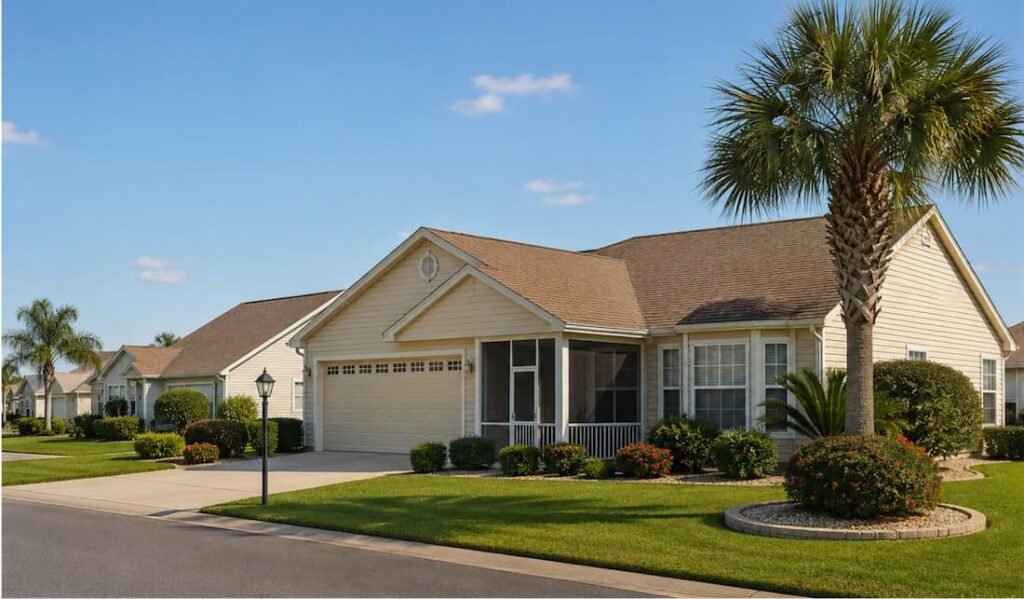

Florida vacant home pests are an often-overlooked problem for seasonal residents. When a property sits empty for weeks or months, insects and rodents have more opportunity to enter unnoticed, making regular inspections an important part of protecting your investment.
Florida’s warm climate is one of the many reasons people love spending time here. Unfortunately, it’s also the perfect environment for a wide variety of household pests.
Many seasonal residents assume that because their home is clean, locked, and receives regular pest control treatments, pests won’t be a concern while they’re away. In reality, even well-maintained homes can occasionally experience pest activity during extended absences.
The good news is that most problems can be minimized with good preparation, ongoing pest control, and regular Home Watch visits that help identify visible issues before they become larger and more expensive.
Why Are Vacant Homes More Attractive to Pests?
A vacant home isn’t necessarily more attractive to pests than an occupied one, but it does provide conditions that allow small problems to go unnoticed.
Florida’s year-round warmth means insects remain active throughout every season. While homeowners are away, several factors can increase the likelihood of pest activity:
- The home remains quiet and undisturbed for weeks or months.
- Small plumbing leaks or condensation can provide a water source.
- Pantry items may remain untouched for extended periods.
- Landscaping and mulch around the home create natural habitats for insects.
- Heavy rainfall can drive outdoor insects indoors seeking shelter.
- During extremely hot weather, insects may also move inside in search of cooler conditions.
Most importantly, because no one is home, early warning signs—such as a trail of ants or a small water leak attracting insects—may go unnoticed until the homeowner returns.
How Do Pests Get Into a Florida Home?
Many homeowners are surprised to learn that insects don’t need an open door or window to enter.
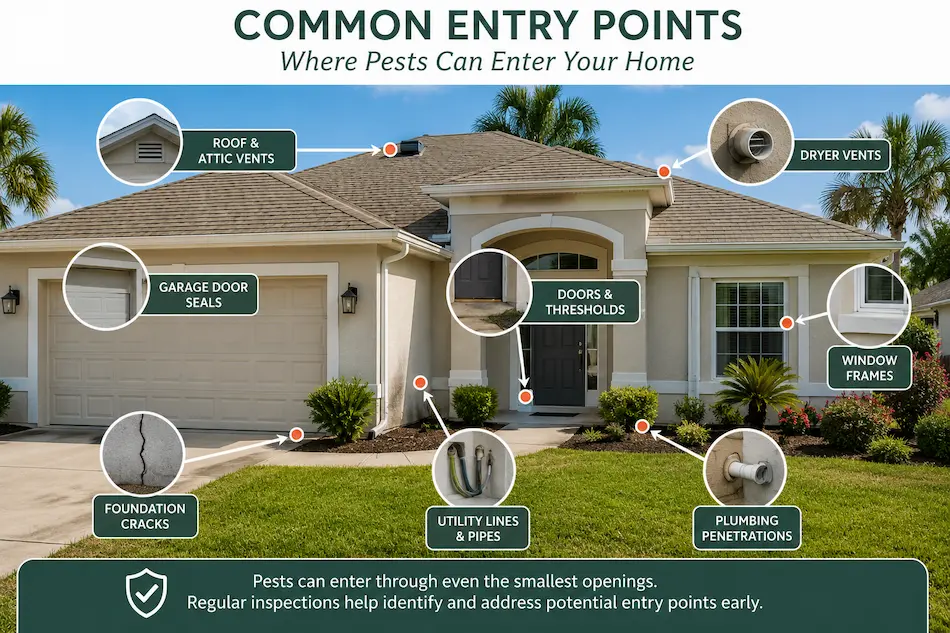
Common entry points include:
- Small cracks in foundations
- Gaps around exterior doors
- Garage door seals
- Utility and plumbing penetrations
- Dryer vents
- Roof and attic vents
- Window frames
- Around air conditioning lines
Some insects can squeeze through openings only a few millimeters wide. Even newer homes aren’t completely sealed from the outside environment.
What Damage Can Household Pests Cause?
Not every pest causes structural damage, but even small infestations can become costly if left unnoticed.
Potential problems include:
- Contaminated food in kitchens and pantries
- Damage to books, cardboard, and stored fabrics
- Chewed electrical wiring by rodents
- Unpleasant odors from insects or rodents
- Damage to insulation and stored belongings
- Expensive structural repairs in the case of termites
In some situations, damage caused by pests or other issues may even affect your insurance coverage, particularly if a home has been left vacant for an extended period. You can learn more in our article on Florida vacant home insurance.
The earlier pest activity is discovered, the easier—and usually less expensive—it is to address.
The 7 Most Common Pests Found in Empty Florida Homes
1. Palmetto Bugs (American Cockroaches)
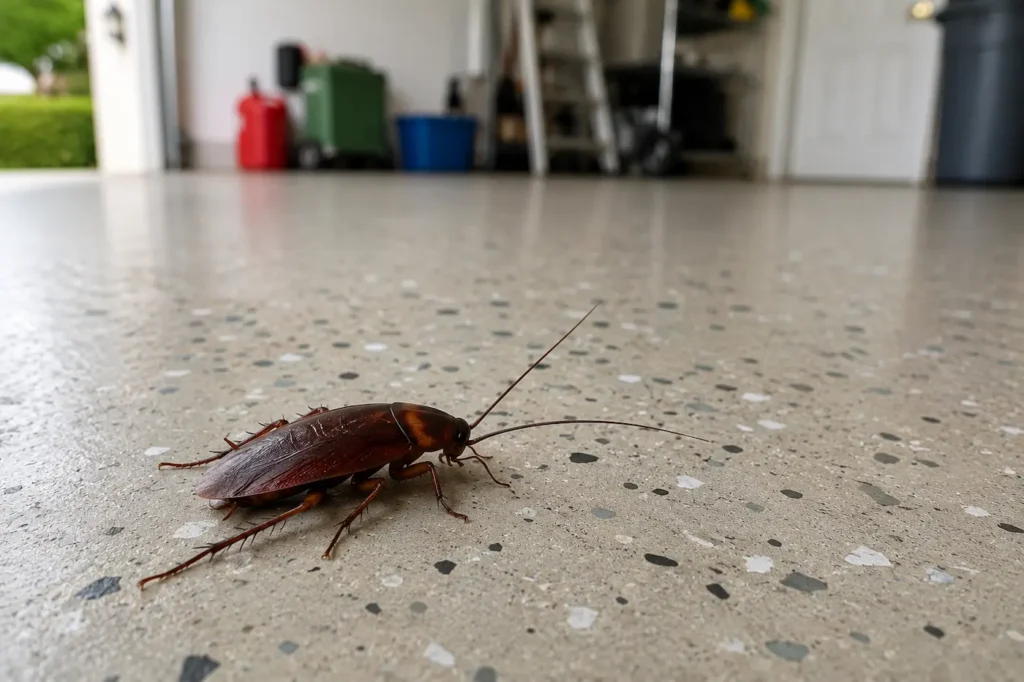
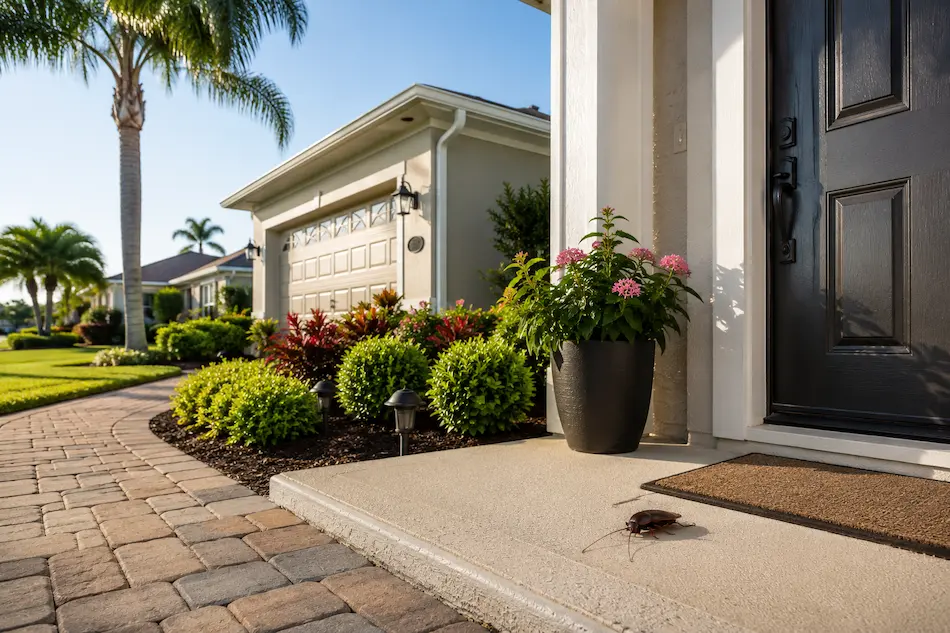
If there’s one pest that most Florida homeowners recognize immediately, it’s the palmetto bug.
Despite their reputation, palmetto bugs are primarily outdoor insects. They commonly live in mulch, landscaping, sewers, and around trees. However, heavy rain, excessive heat, or simple curiosity can bring them indoors.
Many homeowners are surprised to find a dead palmetto bug on the floor after returning home. In fact, this can actually be a sign that exterior pest treatments are working—the insect entered the home after contacting a treated area and died shortly afterward.
While seeing an occasional palmetto bug is fairly common in Florida, repeated sightings may indicate an entry point or a larger issue worth investigating.
2. Silverfish
Silverfish thrive in Florida’s humid climate.
These small, wingless insects prefer dark, damp areas such as:
- Closets
- Bathrooms
- Laundry rooms
- Storage areas
- Garages
Although they don’t bite or spread disease, they feed on paper, glue, cardboard, wallpaper paste, and some fabrics. Homes with elevated humidity levels are more likely to experience silverfish activity.
3. Rodents
Although rodents are less common than insects in many Villages neighborhoods, they can occasionally enter homes through surprisingly small openings.
Mice and rats may nest in garages, attics, or wall spaces where they can chew insulation, damage wiring, contaminate stored items, and leave droppings.
Keeping garages tidy, sealing obvious entry points, and removing food sources all help reduce the likelihood of rodent activity.
4. Termites
Termites represent one of the most expensive pest-related risks for Florida homeowners.
Unlike ants or cockroaches, termites often remain hidden for months—or even years—while feeding on wood behind walls or beneath flooring.
Because they work largely out of sight, homeowners may not discover damage until it becomes significant.
Maintaining a termite protection program and scheduling regular inspections remain some of the best ways to protect your investment.
5. Ants
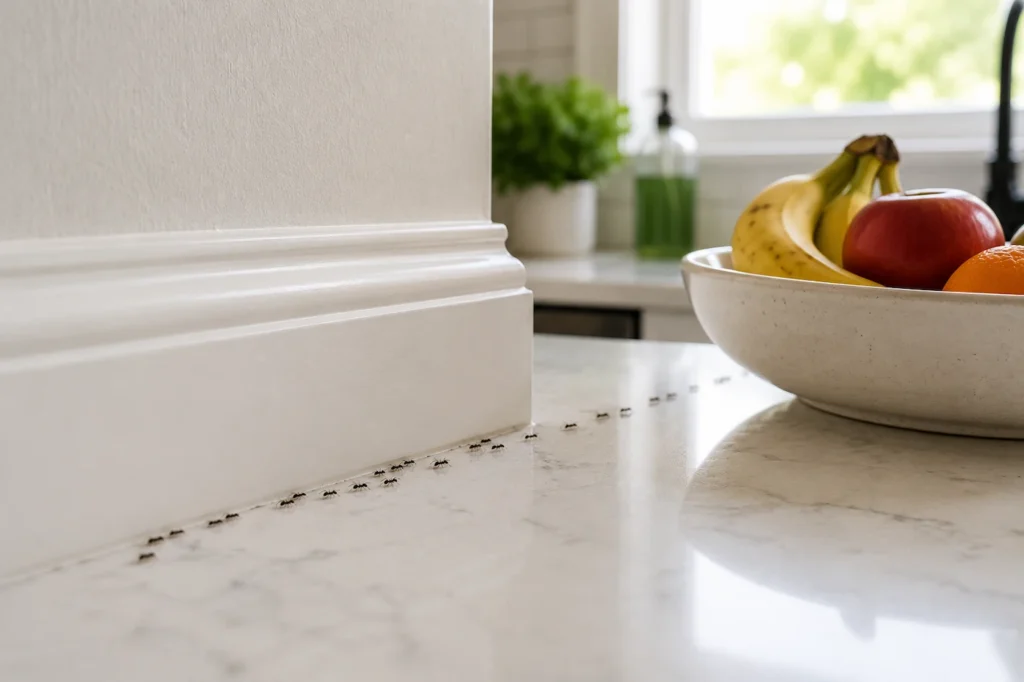
Ants are among the most common household pests in Florida.
What often starts as a single scouting ant can quickly become a visible trail once food or moisture is discovered. Tiny plumbing leaks under sinks, crumbs left behind in kitchens, or even condensation around appliances can attract them.
Florida is home to several ant species, including ghost ants, sugar ants, carpenter ants, and fire ants. Most household invasions involve smaller nuisance ants searching for food or water.
Fortunately, early ant activity is usually easy to spot if someone is checking the home regularly.
6. Spiders
Most spiders found inside Florida homes are harmless and simply follow their food source.
If insects enter a home, spiders often follow.
While the occasional spider isn’t usually cause for concern, an increase in spider webs can sometimes indicate that other insects are also present.
7. Pantry Pests (The One That Surprises Most Homeowners)
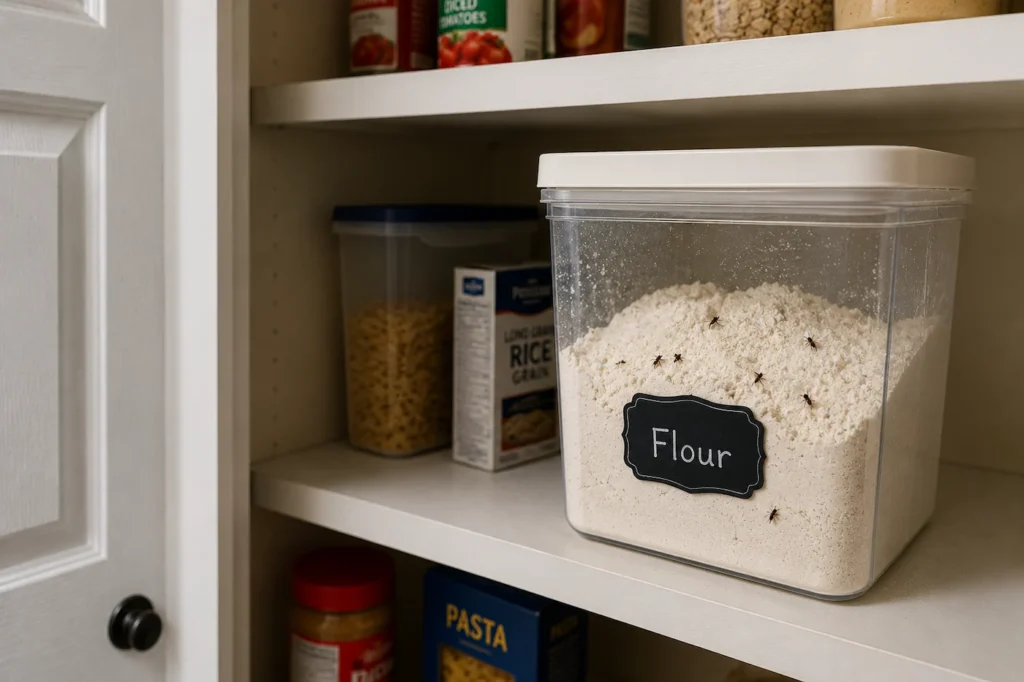
One of the most unexpected pest problems doesn’t come from outside at all.
Pantry pests—including rice weevils, flour beetles, and Indian meal moths—are often already present inside unopened packages of flour, rice, cereal, pasta, bird seed, or pet food. The insects may begin life as microscopic eggs that are impossible to see during packaging.
Weeks or months later, homeowners may return to discover insects inside their pantry and assume they somehow entered the house while it was vacant.
In reality, the problem often began long before they left.
Storing susceptible foods in airtight containers—or removing them before extended travel—can significantly reduce the risk.
Can Pests Get Into a Home Even With Regular Pest Control?
Yes.
This is one of the biggest misconceptions among seasonal homeowners.
Professional pest control is one of the best ways to reduce pest activity around your home. However, the University of Florida IFAS Extension recommends an Integrated Pest Management (IPM) approach that combines prevention, monitoring, inspection, and treatment as needed, rather than relying on pesticides alone. Regular monitoring plays an important role in identifying pest activity before it becomes a larger problem
Exterior treatments are designed to reduce pest activity and create protective barriers around the home. However, Florida’s climate creates constant pressure from insects that naturally live outdoors.
Heavy rainfall, extreme heat, seasonal changes, and tiny openings around the home can still allow the occasional ant, palmetto bug, or spider to make its way inside.
The goal of professional pest control is effective management and prevention—not creating an impenetrable barrier.
Tips to Reduce Pest Problems Before Leaving Your Florida Home
Before leaving your home for an extended period, consider taking a few simple precautions:
- Schedule your regular pest control service before departure.
- Store pantry foods in airtight containers or remove them altogether.
- Clean kitchen counters and floors thoroughly.
- Empty indoor trash bins.
- Repair any known plumbing leaks.
- Seal obvious gaps around doors and utility penetrations.
- Maintain landscaping around the home.
- Keep indoor humidity under control with appropriate HVAC settings.
- Avoid leaving pet food accessible.
- Arrange for someone to check your property regularly while you’re away.
None of these steps can eliminate the possibility of pests entirely, but together they can significantly reduce the risk.
How Home Watch Services Help
While Home Watch services don’t replace professional pest control, they provide another valuable layer of protection through regular visual inspections.
At In The Bubble Home Watch, we look for visible signs of pest activity during every scheduled visit, including:
- Dead insects
- Ant trails
- Rodent droppings
- Signs of termite activity
- Unusual odors
- Evidence of pest damage
If we notice something out of the ordinary, we’ll document it with photos and notify you promptly so you can decide on the appropriate next steps. Early detection often prevents a minor issue from becoming a much larger problem.
Because we live here in The Villages, we understand the unique challenges Florida homeowners face and are committed to helping protect your home while you’re away.
Final Thoughts
Returning home should be exciting—not stressful.
Fortunately, most seasonal homeowners never experience a major pest infestation. With regular pest control, good preparation before leaving, and routine Home Watch visits, most pest issues can either be prevented or identified early.
Florida’s climate means the occasional insect may still find its way indoors, but that’s very different from allowing a small problem to grow unnoticed for months.
Whether you’re away for a few weeks or an entire season, taking a proactive approach can help protect one of your biggest investments and provide valuable peace of mind until you return.
Learn more about our Home Watch Services in The Villages and how regular inspections can help identify visible issues before they become costly repairs.