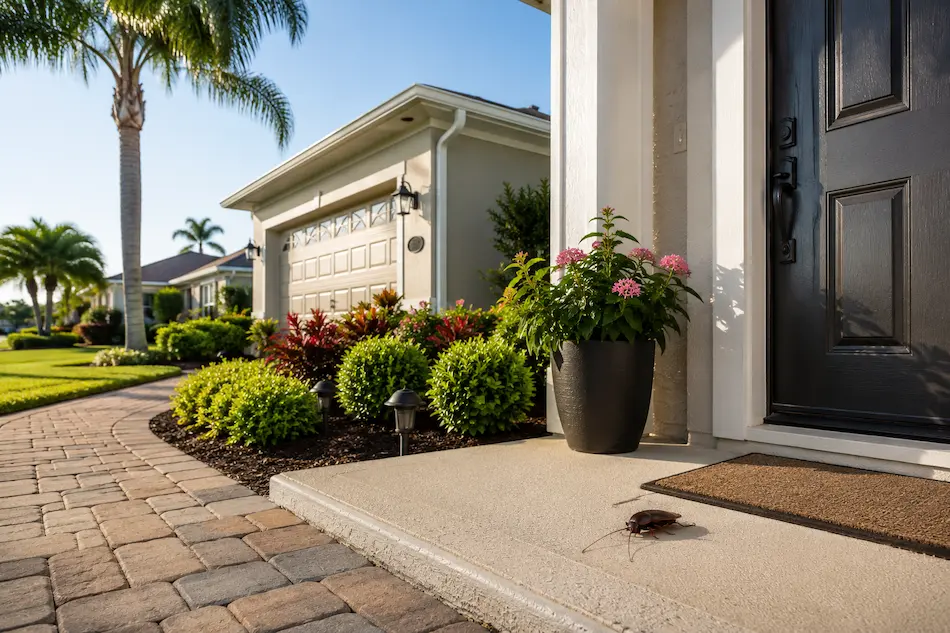
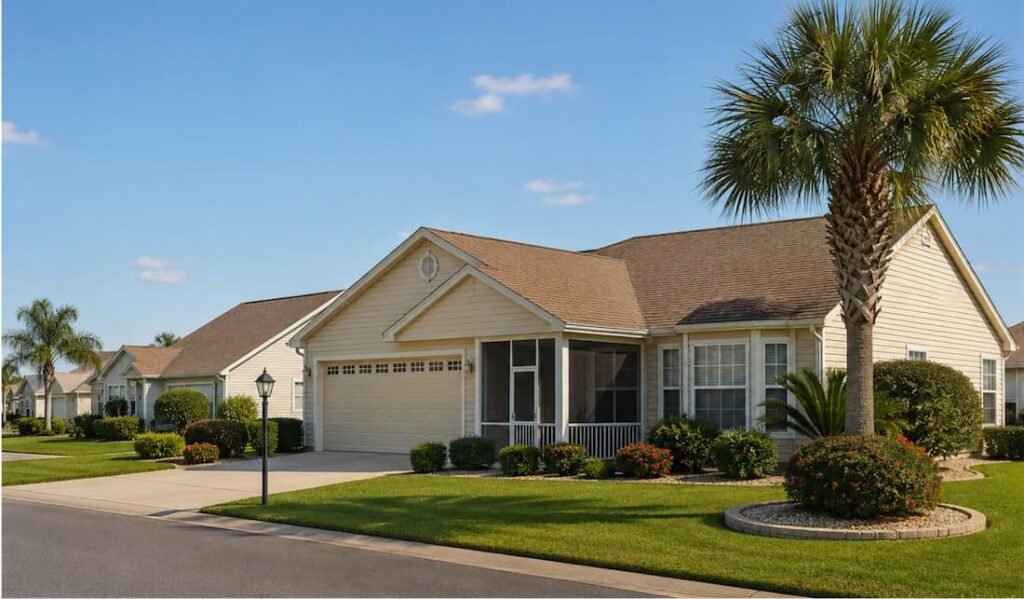

Understanding how Florida vacant home insurance works is important for seasonal residents who leave their homes unattended for weeks or months at a time.
For many seasonal residents in The Villages, leaving Florida for weeks or months at a time is part of life. Maybe you spend summers up north, travel often, or only use your Villages home part of the year.
But before you lock the door and head out, there is one important question worth asking:
Does your homeowners insurance still protect your home the same way if it sits empty for an extended period?
The answer depends on your policy.
In Florida, many homeowners insurance policies include wording related to vacant, unoccupied, seasonal, or secondary homes. These terms can affect how a claim is handled, especially if damage occurs while no one is regularly checking the property.
Empty, Vacant, Unoccupied, Seasonal: Why the Wording Matters
Insurance companies do not always use these words the same way.
A home may be considered:
- Vacant if it is empty or nearly empty.
- Unoccupied if no one is living there, even if furniture and personal belongings remain.
- Seasonal if it is used only part of the year.
- Secondary if it is not your primary residence.
For homeowners in The Villages, this matters because many seasonal homes are fully furnished and well maintained, but still may be considered “unoccupied” for insurance purposes if no one is living there for a long stretch of time.
That does not mean your policy is automatically void. But it does mean your insurance company may have special conditions, exclusions, or reduced coverage after the home has been empty for a certain number of days.
What Florida Vacant Home Insurance Policies Commonly Say About Empty Homes
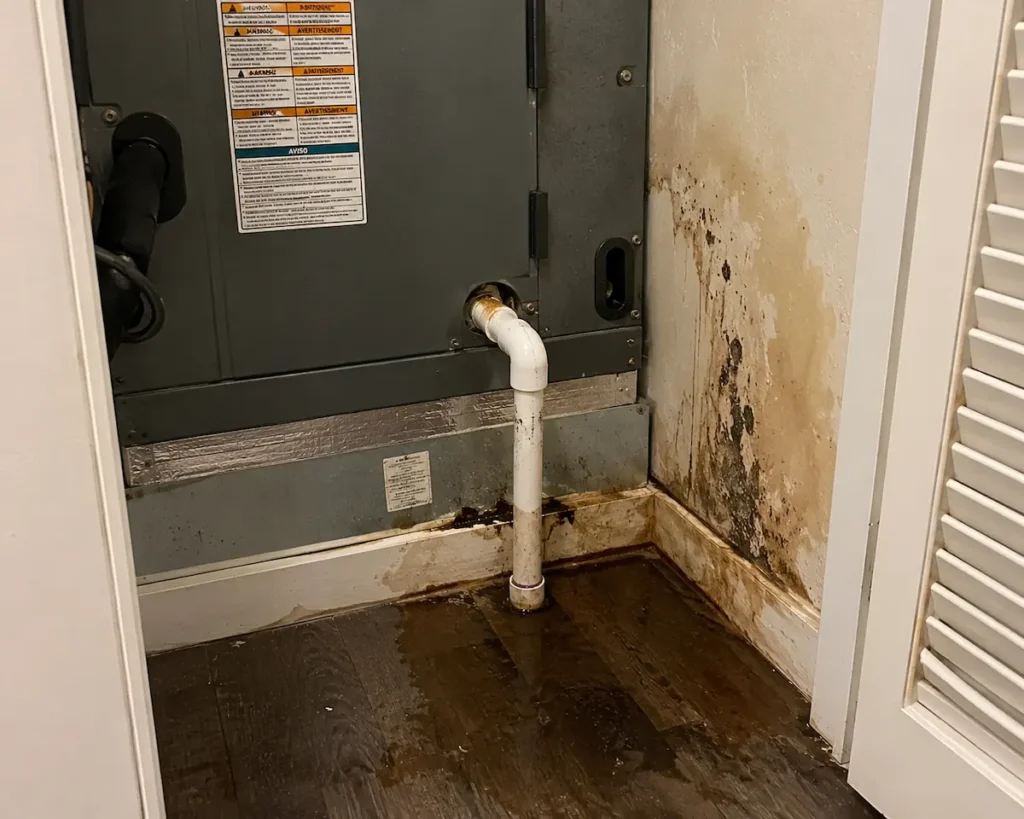
Insurance wording varies by company, but the pattern is clear: insurers consider empty homes higher risk because problems can go unnoticed.
A small HVAC drain line clog, plumbing leak, roof issue, pest problem, or security concern can become much worse when no one is there to notice it early.
Some policies limit or exclude certain claims after a property has been vacant or unoccupied for 30 days or more. Others may require the homeowner to take reasonable care, such as shutting off water, maintaining systems, or arranging regular monitoring.
Here are a few examples from major insurance-related sources:
Citizens Property Insurance
Citizens has addressed vacancy-related policy language in its Florida policy updates. In one form update, Citizens described provisions applying when a dwelling has been vacant for more than 30 consecutive days before a loss. The affected losses included water damage, theft, attempted theft, glass breakage, pilferage, and burglary.
Citizens has also clarified that a seasonal home may include a home with continuous unoccupancy of three or more consecutive months during a policy year.
That is especially relevant for snowbirds and seasonal residents who leave The Villages for the summer.
Universal Property & Casualty
Universal’s underwriting materials have included wording that vacant or unoccupied dwellings may be ineligible for standard homeowners coverage. One Universal manual defines “unoccupied” to include a dwelling with contents if it is no longer a place of usual return or if there is no visible sign of occupation or maintenance for more than 30 days.
That wording is important because it points to something homeowners can control: visible signs of maintenance and regular oversight.
Tower Hill
A Tower Hill homeowners policy form includes several provisions related to vacancy or unoccupancy. For example, certain water-related exclusions may apply when the dwelling is vacant or unoccupied for more than 30 consecutive days unless reasonable care has been used to shut off the water supply and drain systems and appliances.
The same form also references theft, attempted theft, vandalism, and malicious mischief exclusions when a dwelling has been vacant for more than 30 consecutive days before the loss.
State Farm
State Farm advises homeowners that if a home is empty for a month or more, homeowners insurance may not cover losses that occur while it is vacant. They also recommend talking with your agent to discuss options.
State Farm’s public guidance also encourages homeowners to enlist local support, have someone keep an eye on the property, collect mail, report concerns, and maintain the exterior.
American Integrity
American Integrity offers vacant home insurance for unoccupied properties, noting that unoccupied homes come with additional risks. Their vacant home coverage page specifically mentions risks such as fire, vandalism, theft, windstorm damage, and liability.
The fact that separate vacant home coverage exists is a good reminder: standard homeowners insurance may not always be the right fit for a home that will sit empty for an extended period.
So, Can Your Insurance Be “Void” If You Leave Your Florida Home Empty?
Possibly — but it depends on the policy.
It is more accurate to say:
Your coverage may be limited, reduced, excluded, or affected if your home is vacant or unoccupied for longer than your policy allows.
Some policies may exclude specific losses. Some may reduce payment. Some may require certain steps to be taken before coverage applies. Some may require a different policy or endorsement if the home will be vacant for an extended time.
That is why homeowners should not guess.
Before leaving your Villages home for several weeks or months, contact your insurance agent or carrier and ask:
- How does my policy define vacant, unoccupied, seasonal, and secondary residence?
- How many days can my home be empty before coverage changes?
- Are water damage, theft, vandalism, mold, or HVAC-related claims affected?
- Am I required to shut off the main water supply?
- Do I need a vacant home endorsement or different policy?
- Do you require proof that the home is being checked?
- Would time-stamped Home Watch reports and photos help document that the property was monitored?
Why Documentation Matters
If something happens while you are away, your insurance company may ask questions such as:
- When was the home last checked?
- Was the home being maintained?
- Were there signs of prior damage?
- Was the HVAC running?
- Was humidity being monitored?
- Was the water on or off?
- Were doors and windows secure?
- Was anyone checking for leaks, pests, storm damage, or visible problems?
This is where a professional Home Watch service can be extremely helpful.
A neighbor may glance at the driveway or pick up mail, which is kind and useful. But that is not the same as a documented visual inspection with photos, notes, timestamps, and visit history.
How In The Bubble Home Watch Helps
In The Bubble Home Watch provides professional Home Watch services exclusively inside The Villages, Florida.
Our visits are designed to help seasonal residents, snowbirds, and frequent travelers stay informed about the condition of their home while they are away.
- Scheduled Home Watch visits
- Exterior security checks
- Doors and windows checked for security
- Packages, newspapers, and flyers removed as needed
- Lawn, landscaping, driveway, and visible roof observations
- Pool and spa appearance checks, if applicable
- Interior visual checks
- HVAC operation observations
- Humidity checks
- Visible leak and water damage checks
- Plumbing checks, including faucets and toilets as agreed
- Water heater area observations
- Pest activity observations
- Storm and severe weather checks when safe to perform
- Contractor access coordination, if requested
- Time-stamped photo reports
- Detailed visit notes
- Secure client dashboard access
- Visit history based on your service plan
These reports do not guarantee that an insurance claim will be approved. Insurance decisions are always made by your insurance company based on your specific policy.
But they can provide something very valuable:
A documented record that your home was being checked regularly while you were away.
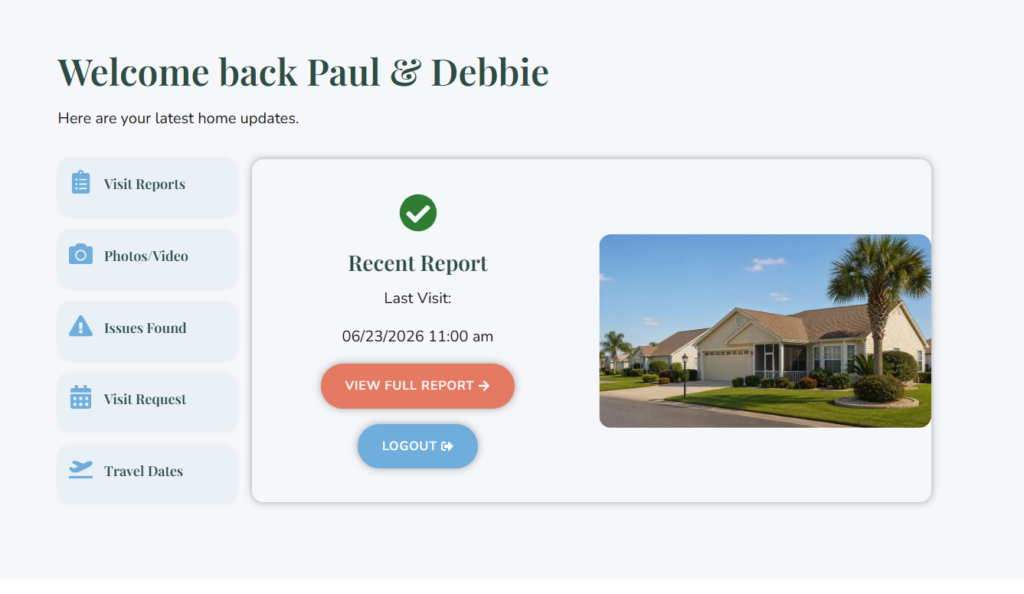
What Documented Home Watch Reports Can Show
Your Home Watch reports may help by showing:
- The date and time your property was visited.
- That the home was visually checked on a regular schedule.
- That doors and windows were checked.
- That visible interior and exterior conditions were observed.
- That photos were taken during the visit.
- That concerns were reported promptly.
- That the home showed signs of monitoring and maintenance.
- That storm-related checks were performed when appropriate and safe.
For homeowners who are away for months at a time, that kind of documentation can be reassuring not only for peace of mind, but also for recordkeeping if questions ever come up later.
Home Watch and Insurance: Working Together
Homeowners insurance and Home Watch serve different purposes, but they can complement each other.
Your insurance policy helps protect you financially if a covered loss occurs. Home Watch helps provide regular oversight of your property while you’re away, with documented visits, photos, and reports that create a record of the home’s condition over time.
For seasonal residents in The Villages, having someone regularly check the property can help identify visible issues sooner and provide documentation showing the home was being monitored during an extended absence.
Before You Leave The Villages for an Extended Time
Before heading out of town, consider taking these steps:
- Call your insurance agent and ask how your policy handles vacant, unoccupied, seasonal, or secondary homes.
- Ask whether regular documented checks are recommended or required.
- Review your water shutoff, HVAC, humidity, and storm preparation plans.
- Make sure emergency contacts are current.
- Arrange for regular Home Watch visits.
- Keep copies of reports and photos in case you ever need them.
Peace of Mind While You Are Away
Your Villages home is a major investment. Whether you are gone for a month, a season, or several months at a time, it deserves more than an occasional guess that everything is probably fine.
Regular Home Watch visits provide early detection, practical oversight, and documented proof that your home is being looked after.
At In The Bubble Home Watch, we live here too. We understand The Villages, the Florida climate, and the concerns seasonal homeowners face.
If you are planning to leave your home for an extended period, now is the time to check your insurance policy and put a documented Home Watch plan in place.
Because every Florida vacant home insurance policy is different, homeowners should review their coverage and speak directly with their insurance agent before leaving for an extended period.
Need someone to watch your home while you are away?
Contact In The Bubble Home Watch to schedule reliable, documented Home Watch visits inside The Villages.